Your business requires regular cleaning based upon risk factors, operational volume, food allergen presence, and health inspections, plus documented records supporting HACCP compliance, inspection results, and government health requirements. The following sections describe critical cleaning system elements.
Key Takeaways
- Sanitation specialists in Brampton work with restaurants, grocery departments, commissaries, warehouses, bakeries, schools, mobile vendors, and allergen-sensitive operations.
- Area-specific procedures treat frequently contacted areas, food-contact equipment, kitchens, floors, drains, restrooms, and storage areas for preventing cross-contamination.
- Confirmation of proper chemical concentration, appropriateness, and contact time is executed by trained vendors, with completion logged using tests, assessments, and remedial documentation.
- Danger, production volume, changeovers, releases, and standards must inform sanitation calendars, with routine, weekly, and periodic operations distributed by location.
- Insurance, colour-coded instruments, hazard analysis knowledge, sanitation expertise, safety training preparation, credentials, and assessment-ready hygiene records are important supplier traits.
Brampton Facilities That Need Food Safety Cleaning: Which Ones?
You must comply with food safety cleaning if your business is falls under health department oversight, food standards, or HACCP requirements. This covers food venues, break rooms, food centers, supermarket areas, butcheries, seafood displays, shops, and commercial food prep.
Proper sanitation protocols is additionally essential in supply facilities, manufacturing operations, cold storage areas, bakery retailers, educational nutrition programs, banquet halls, and food delivery hubs. Mobile and temporary establishments are included, like catering vehicles, festival sellers, and pop-up stands. Your location requires written cleaning standards when your team handle raw materials, divide prepared foods, warm meals, or maintain allergen storage. In Brampton, sanitation stays optional; it forms statutory, functional, and public health standards.
What Do Brampton Cleaning Experts Clean?
You need professional cleaners who sanitize high-touch surfaces, kitchens, floor surfaces, and bathrooms to comply with food safety and health regulations. They focus on these spaces because they pose the greatest danger for cross-contamination, slip hazards, and sanitation breaches.
By knowing exactly what gets cleaned, you can make sure your operation's sanitation protocols meet compliance standards.
Sanitizing High-Touch Areas
base sterilization schedules based on usage patterns, exposure levels, and facility operations.
sample collection to verify disinfection efficacy
Kitchens, Floors, and Restrooms
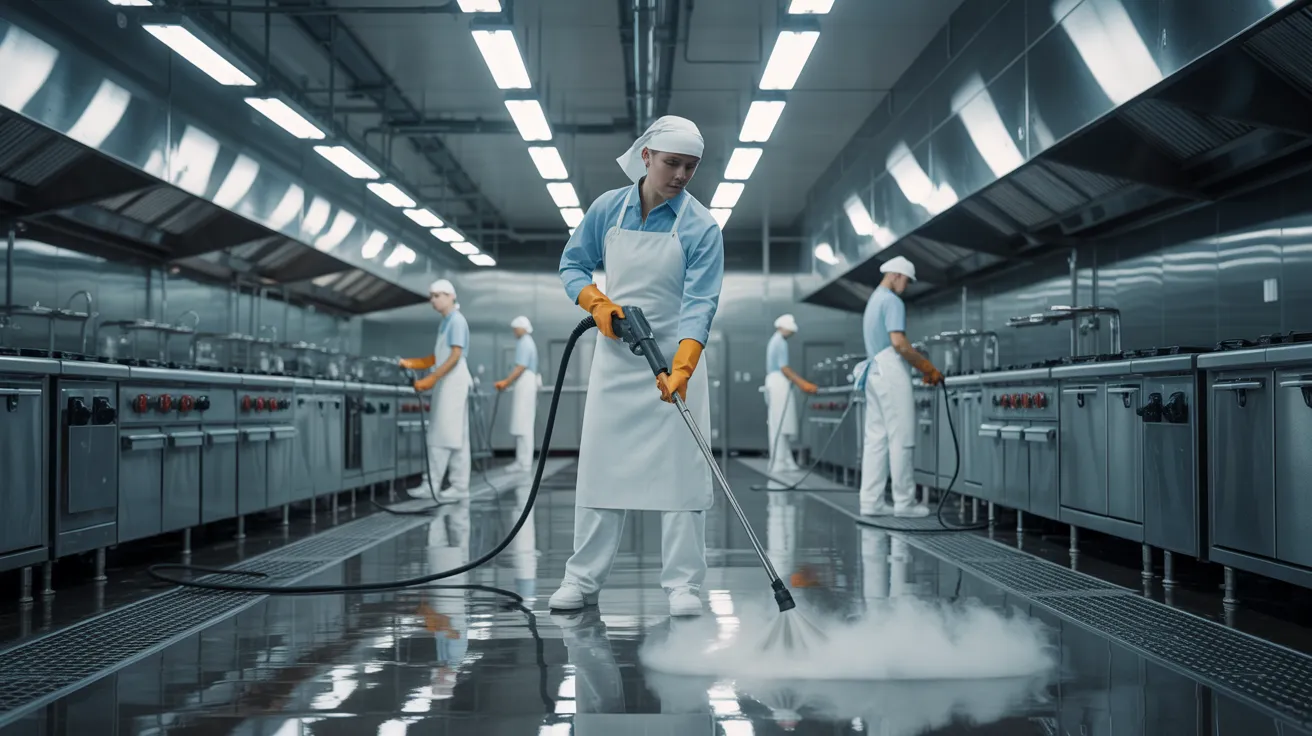
Expect Brampton cleaning experts to target kitchens, floors, and restrooms because each area carries distinct food safety, slip-and-fall, and sanitation risks. In industrial kitchens, you need grease removal from cooking stations, appliance surfaces, drain systems, preparation areas, and backsplashes to reduce bacterial growth and pest activity.
Professional floor upkeep with documentation is also included. is also provided as part of the service.
Restroom sanitation involves disinfecting surfaces, fittings, separators, dispensers, and containers, restocking supplies and controlling odours. They also maintain restaurant cleaning supply rooms where product storage, sink cleanliness, and drain systems impact daily sanitation standards and worker protection.
How Food Safety Cleaning Benefits Brampton Operations
In Brampton, you must copyright food-safe cleaning standards to meet health code requirements and pass inspections. You also minimize bacterial spread through proper cleaning of food-preparation surfaces, appliances, and frequently-touched items. Most importantly, you safeguard community wellness by reducing the chance of food poisoning in your establishment.
Sanitary Standards Adherence
Brampton food operations must comply with rigorous sanitary regulations, so sanitation practices is essential to satisfying health codes, defending customers, and eliminating penalties. You must maintain hygienic food handling zones, written maintenance records, proper chemical use, and auditable operational standards that comply with municipal and provincial inspection expectations.
Detailed cleaning files help you to show due diligence during compliance reviews and establish your operations remain consistent, consistent, and documented. Comprehensive sanitation also enables allergen control by reducing particles on shared equipment and regularly touched locations.
Cross-Contamination Prevention
Meeting health code standards also depends on your capacity to stop cross-contamination during daily food handling and cleaning. You must keep raw items away from prepared dishes, clean work areas after each use, and keep cleaning products separate from food areas. Clear procedures reduce transfer risks and ensure ongoing adherence to health checks.
You should implement allergen segregation to prevent major allergens from touching common work areas, storage bins, or tools. Employ separate boards, labeled implements, and careful equipment identification so employees avoid combining products throughout cooking or serving. Mandate washing hands following uncooked proteins, shellfish, egg items, or allergen products. Replace wiping cloths regularly, and check disinfectant potency using test kits. When staff members receive training on these procedures each work period, you create a cleaner, safer operation that meets Brampton's food safety expectations daily.
Public Wellness Defense
When food safety cleaning breaks down, you don't just risk a failed inspection—you increase the chance of food-related sickness impacting customers, staff, and the wider Brampton community. You also undermine your responsibility in protecting public health, especially in busy food facilities where pathogens travel quickly through surfaces, equipment, and touchpoints.
You need cleaning protocols that remove soils, disinfect properly, and confirm effectiveness. That means following contact times, employing authorized sanitizers, documenting schedules, and educating employees to meet regulatory standards. These controls support pathogen reduction by lowering microbial loads before they contaminate surfaces or food. In Brampton, strong sanitation shields at-risk groups, limits outbreak potential, and helps you demonstrate due diligence. When you maintain proper standards, you exceed basic requirements—you actively reduce risk and support safer food service citywide.
How Can Cleaning Practices Ensure Food Safety Compliance?
Adopting thorough cleaning protocols underpins food safety compliance by lowering contamination exposure, managing pathogen expansion, and positioning your facility in accordance with sanitation requirements under HACCP-based programs and public health regulations. You confirm that contact surfaces stay visibly clean and microbiologically controlled, backing documented preventive controls and inspection readiness.
Diligent cleaning also strengthens allergen control by removing residues that can lead to undeclared allergen exposure. When you match approved sanitation protocols with standards training, your staff can adhere to consistent approaches, apply approved chemicals properly, complete records properly, and handle discrepancies in advance of issues intensify. Systematic cleaning promotes traceability, validates corrective steps, and exhibits accountability throughout audits. It also helps you safeguard product quality, copyright operational adherence, and lower the likelihood of compliance actions, market recalls, complaints, and avoidable public health risks.
What's the Best Time to Arrange Commercial Cleaning?
food-contact areas, bathrooms, and frequently touched areas
promotional occasions, catering services, or public functions need to plan cleaning both [[before and following for optimal event turnaround. Record schedules, verify that work is completed, and adjust routines when hazards, volumes, or regulations change
What Should You Look For in Brampton Cleaning Experts?
Start by screening providers against food-safe sanitation requirements, not cost only. You should verify that each company understands CFIA, public health, and HACCP compliance standards relevant to your facility. Ask for insurance documentation, WHMIS compliance, documented staff training, and supervision practices. Review whether technicians understand contamination prevention, chemical handling, and traceable sanitation records.
You must also evaluate operational reliability and oversight. Seek references from Brampton food companies, then assess response times, corrective processes, and communication standards. Ensure the company enables supplier checks and can provide inspection-compliant records when authorities or third parties demand verification. Verify equipment care, colour-coded tools are deployed correctly, and operational-specific risks are understood. A qualified provider safeguards compliance, product integrity, and your brand reputation.
What does a cleaning and sanitation plan encompass?
Put together a written program that clarifies every sanitation task, standard, and responsibility before production begins. You should specify cleaning intervals, permitted substances, dilution percentages, exposure times, instruments, and inspection methods for each sector, surface, and equipment. Add pre-operational inspections, corrective actions, and employee training requirements.
Your program should also cover contamination prevention, garbage management, pest control procedures, and recorded timelines for restrooms, drains, floors, and food-contact areas. Explain how you'll separate raw and ready-to-eat processes, support ingredient tracking, and maintain accurate allergen labeling through validated cleaning between product changes. You should assign accountability, maintain signed records, and compare results against regulatory standards, HACCP controls, and customer requirements. When gaps appear, revise procedures immediately and re-educate staff.
Regular Asked Questions
Will cleaning services handle nighttime hours at Brampton facilities?
If you run controlled spaces, you'll also require documentation that enable audits and ensure compliance.
Can Brampton cleaning experts manage emergency spill response?
Yes, you can locate several Brampton cleaning professionals offering spill containment services. They manage hazardous materials, evaluate risks, isolate zones, and execute rapid cleanup to minimize risk and limit operational impact. You should confirm timeframes, training credentials, protocols, and procedures. If your facility needs compliance, pick a provider that logs events, follows procedures, and supports audits.
Can eco-friendly disinfectants be utilized safely on surfaces contacting food?
Yes, eco-friendly disinfectants can be safe for surfaces contacting food if you opt for disinfectants approved for food contact and meeting regulatory standards. You should validate contact times, dilution ratios, and rinsing needs before implementation. Many natural-based solutions minimize chemical burden, but you must obtain demonstration of efficacy against harmful bacteria. To keep surfaces residue-free, you must adhere to exact manufacturer guidelines and confirm the sanitizer meets food sanitation requirements.
Can cleaning schedules change with production fluctuations?
Certainly, cleaning schedules accommodate seasonal production changes readily. Revise timing, personnel, cleaning agents, and validation steps to fit with seasonal patterns while sustaining compliance standards. Limit operational delays through scheduling sanitization alongside changeovers, maximum output, and operational patterns. Further update standard operating procedures, instruction programs, and monitoring protocols to capture periodic risks, new evaluation allergens, or increased soil loads. Regular reviews keep your strategy functional.
Are professional cleaning companies offering staff training on sanitation best practices?
Indeed, professional cleaners often offer employee coaching on sanitation best practices. Your team receives instruction on safe chemical application, contact times, cross-contamination prevention, equipment breakdown, and documentation. They typically follow training with HACCP, GMP, and CFIA or regional health standards criteria. Many also execute compliance inspections to verify compliance, reveal issues, and reinforce corrective actions. This assists you to maintain consistent procedures, pass inspections, and reduce food safety risks each day.
Closing Remarks
When you partner with Brampton commercial cleaning and food safety experts, you aren't merely cleaning—you maintain your facility audit-prepared and your standards compliant. From processing areas to kitchen spaces, every polished surface and maintained area helps reduce unwelcome guests and avoid expensive problems. By scheduling service at the right intervals and adhering to a detailed cleaning schedule, you safeguard staff, customers, and your brand image. In a strict regulatory setting, sanitary conditions aren't optional—they're fundamental to proper operations.